
By Dr. Nick Touran, Ph.D., P.E., Reading time: 1 minute
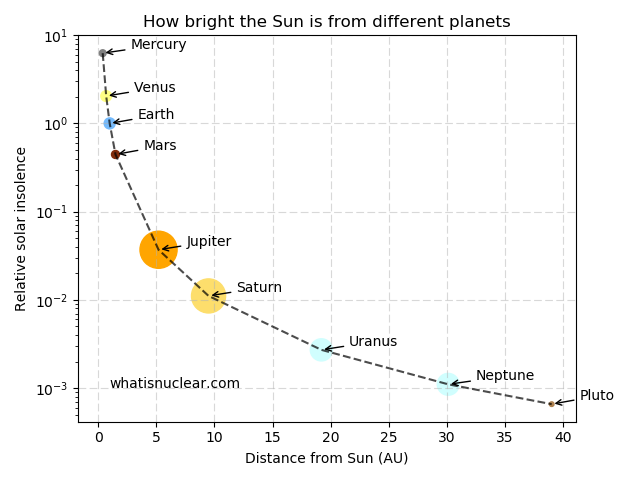
Nuclear energy is a wonderful energy source for space. As you go away from the sun, solar panels struggle to gather enough energy to run a spacecraft or probe, and chemical rocket fuel tanks would just be too big. Many famous missions depended on nuclear energy (Cassini, Mars Rover, Voyager, etc.).
Nuclear isotopes in space #
Cassini, rovers, etc. have been powered by something called a radioisotopic thermal generator (RTG). These devices use radioactive isotopes produced in nuclear reactors on Earth (usually Plutonium-238) coupled to a device that can convert heat directly to electricity. RTGs are kind of like really long-lived batteries that can provide tens or hundreds of Watts for decades.
Nuclear reactors in space #
Nuclear reactors can be used in space to produce heat, electricity, and/or propulsion. They could be used to power a Mars or Moon base or configured as a nuclear-powered rocket to get around out there.
In November 2020, a company called Space Nuclear Power Corporation was spun out of a Los Alamos National Lab effort to commercialize space-based nuclear reactors.
Video #
Here’s an excellent summary of nuclear technology in space from an astronuclear engineer named Chris Morrison:
Source:


