Of all the known energy resources, nuclear is perhaps the most passionately debated and least understood. let’s discuss what makes some people so excited and supportive of nuclear energy.
- Extreme energy density leads to minuscule pollution and mineral needs
Because nuclear fuel contains millions of times more energy per mass than anything else, it is possible to keep all the byproducts accounted for and out of the biosphere, in strong contrast to fossil and biofuels which release much of their combustion wastes into the air, causing severe health and environmental problems. The following table shows how long a 100 Watt light bulb could run from using 1 kg of various fuels. Natural uranium undergoes nuclear fission and thus attains extremely high energy density (energy stored in a unit of mass).
| Material | Energy Density (MJ/kg) | 100W light bulb time (1kg) |
|---|---|---|
| Wood | 10 | 1.2 days |
| Ethanol | 26.8 | 3.1 days |
| Coal | 32.5 | 3.8 days |
| Crude oil | 41.9 | 4.8 days |
| Diesel | 45.8 | 5.3 days |
| Natural Uranium (LWR) | 5.7×10⁵ | 182 years |
| Reactor Grade Uranium (LWR) | 3.7×10⁶ | 1,171 years |
| Natural Uranium (breeder) | 8.1×10⁷ | 25,700 years |
| Thorium (breeder) | 7.9×10⁷ | 25,300 years |
Energy densities of various energy sources in MJ/kg and in the length of time that 1 kg of each material could run a 100W load. Natural uranium has undergone no enrichment (0.7% U-235), and reactor-grade uranium has 5% U-235. By the way, 1 kg of weapons-grade uranium (95% U-235) could power the entire USA for 177 seconds. All numbers assume 100% thermal-to-electrical conversion. See our energy density of nuclear fuel page for details.
- Nuclear energy is carbon-free
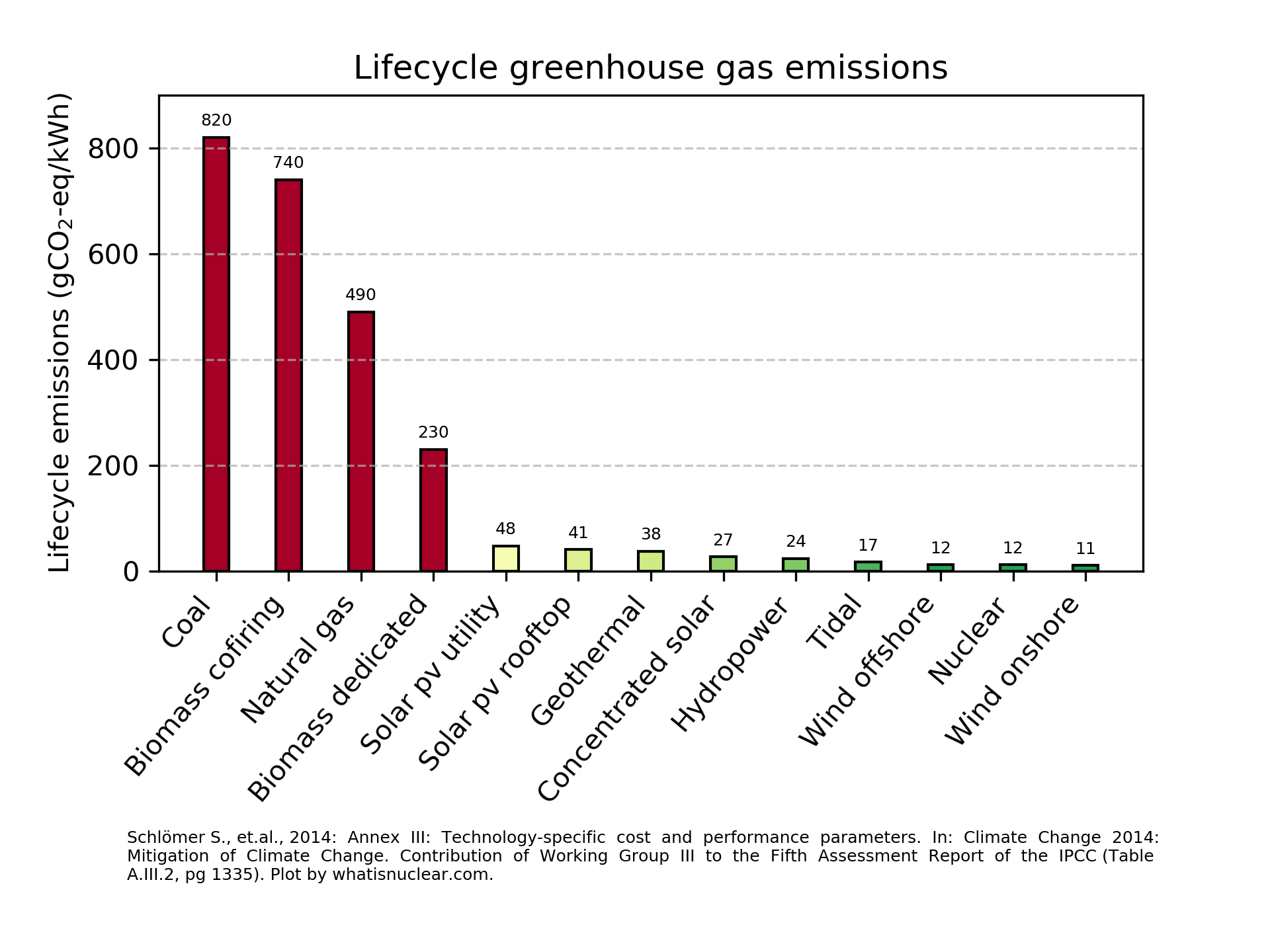
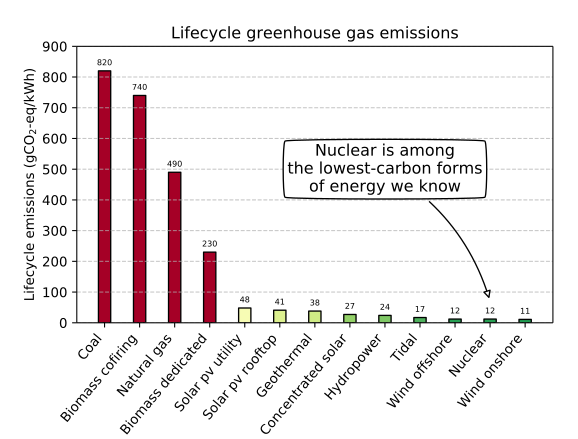
Splitting atoms is a carbon-free process, so nuclear power is a global solution to climate change. While some processes in the overall lifecycle are currently carbon-emitting, the net result is that nuclear is nearly as low-carbon as you can get. Once we electrify construction and mining equipment and power it all with nuclear and other zero-carbon processes, the overall carbon will trend to zero.
- Nuclear reactors can make energy on demand as needed
One loading of fuel lasts 18+ months in a reactor, and they generally operate for that long non-stop. No cloudy days or calm nights will prevent nuclear energy from being delivered to those who depend on it. While uncommonly done due to current market structures, today’s nuclear reactors are perfectly capable of ramping their power up and down daily, to the tune of 2-5% full power per minute!
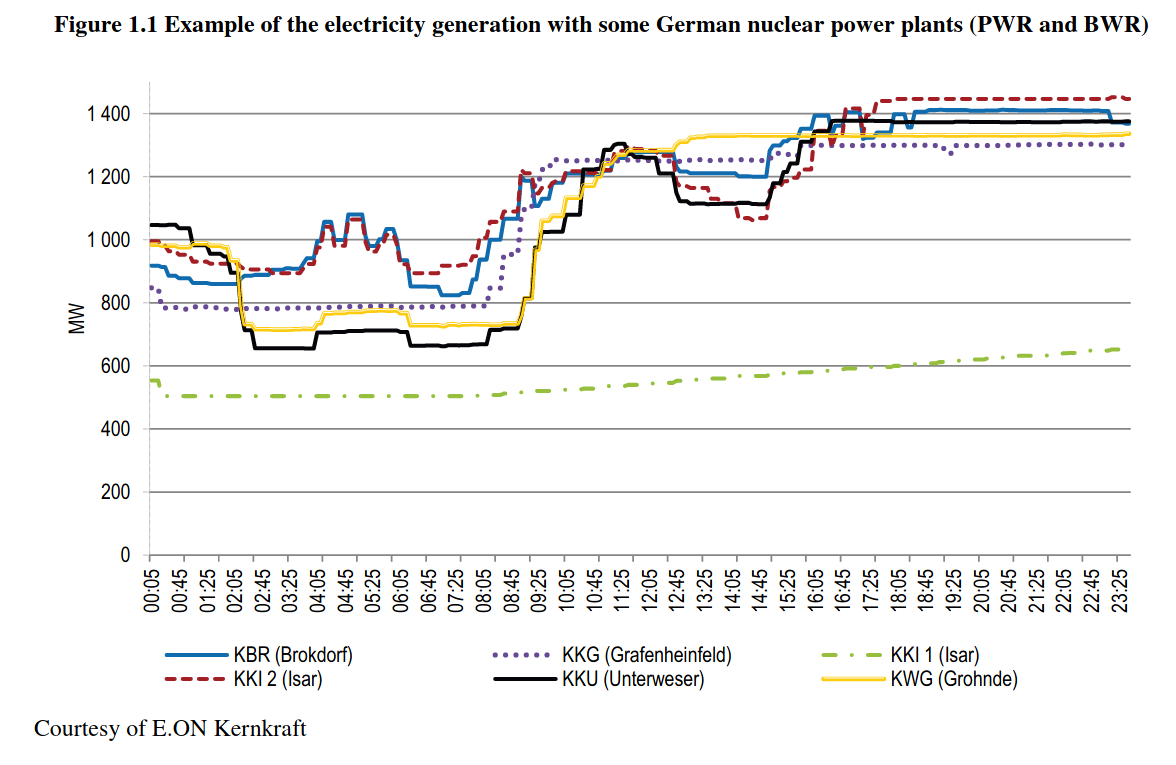
This can be an important complement to low-carbon but uncontrollably-intermittent power sources like wind and solar.
- Nuclear Energy is sustainable
We have enough nuclear fuel resources to power the world for literally billions of years with advanced reactors. Even with conventional reactors, peak uranium is far off.

Humans use a lot of energy, and we’re using more every day. Between 2000 and 2010, the world’s total energy consumption rose by an astounding 29% [1]. Choices about our consumption of energy are fundamental to the primary geopolitical and environmental struggles of our day. Nuclear energy is a strong candidate for supplying our energy while alleviating these struggles.
Source: